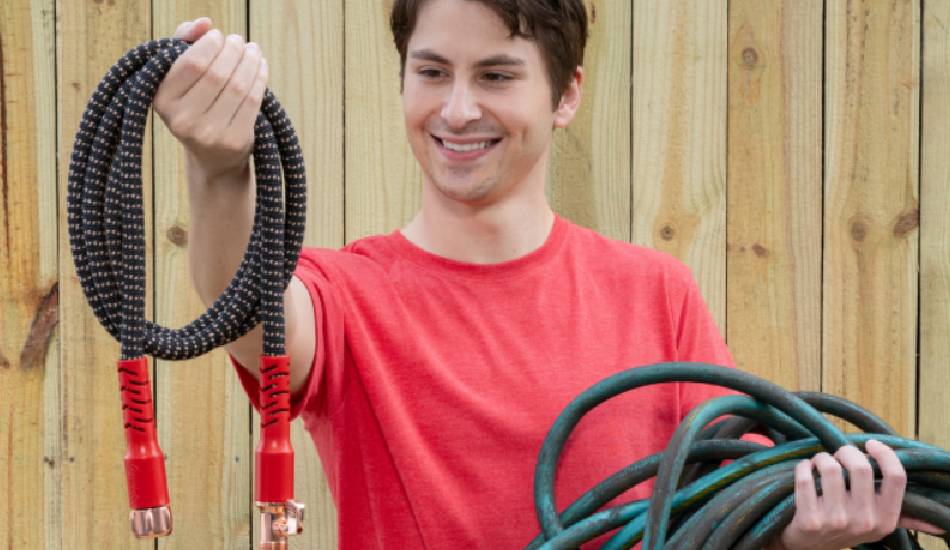
An expandable hose like the Pocket Hose Copper is light, compact and kink-free, which is why so many people switch to one. Give it a short tune-up a few times a year and it will reward you with more seasons of use. Set a timer for ten minutes and work through this list.
Minute 1–2: Check the washers
Unscrew the hose from the spigot and look inside the female connector. If the rubber washer is flattened, cracked or missing, replace it — it's the most common cause of leaks at the tap. Reconnect by hand only; wrenches can crush washers and damage threads.
Minute 3–5: Clean the nozzle
Hard water leaves mineral deposits that clog spray settings. Soak the nozzle in a 50/50 mix of warm water and white vinegar, then rinse. Wipe the copper fittings while you wait — a bit of patina is normal and doesn't affect the seal.
Minute 6–8: Inspect the hose
- Run your hand along the outer fabric for fraying or cuts.
- Turn the water on slowly and watch it expand evenly.
- Stop and inspect any bulges or soft spots before using it again.
Minute 9–10: Fix your storage
Coil the hose loosely and hang it in the shade. Strong sun breaks down the stretchy inner tube over time, so a shaded hook, a covered patio or a lidded bin is ideal.
Daily habit: always turn off the spigot, then squeeze the nozzle to release pressure. Leaving the hose pressurized for hours is one of the fastest ways to wear it out.
A note on pressure
If your home's water pressure runs high, an inexpensive inline pressure regulator protects the hose from sudden surges. Open the tap gradually every time.
Cold snaps
Coastal Southern California rarely freezes, but inland areas and mountain cabins can. If temperatures will drop below freezing, drain the hose fully and store it indoors.